
Plumbing problems after heavy rain usually occur because the downpour exposes a weakness that was already developing. Blocked gutters reach capacity, tired flashings let water through, damaged underground pipes take in debris, and overloaded sewers can back up through low fixtures or gullies.
The location and timing provide the first clue. A ceiling leak during wind-driven rain points to a different problem from a toilet that bubbles after hours of rainfall. This guide maps each symptom to its likely cause, safe response and appropriate trade.
Key Takeaways
- Heavy rain often reveals existing roof plumbing, drainage or sewer faults rather than creating a completely new problem.
- Water through a ceiling, metal roof or gutter line needs leak tracing. The visible drip may be some distance from the entry point.
- Overflowing gutters can indicate debris, poor falls, inadequate capacity, restricted downpipes or a box gutter fault.
- Bubbling gullies and toilets may indicate a sewer surcharge or a private drain blockage. Sewage entering the home requires urgent attention.
- CCTV drain inspection can identify underground cracks, displaced joints, root intrusion and collapsed sections after surface water recedes.
- Never enter floodwater or attempt roof repairs during wet or windy conditions.
Why Heavy Rain Finds Your Plumbing’s Weak Points
Brisbane’s combination of a subtropical climate, creek catchments and low-lying areas makes intense rainfall part of local home maintenance. Brisbane City Council describes October to March as the city’s typical storm season and provides a Flood Awareness Map for checking property-level risk.
A system may work in light rain but struggle when water arrives quickly. Leaves can form a temporary dam, a poorly falling gutter can fill faster than it drains, and wind can push water beneath an ageing flashing. Saturated soil can also move around an already cracked pipe.
It helps to separate two systems:
- Stormwater carries rain from roofs, gutters, downpipes, pits and property drainage towards an approved discharge point.
- Sewerage carries wastewater from toilets, showers, sinks and laundries to the wastewater network.
These systems should be separate. During intense rainfall, however, water can enter the sewer network through faults or incorrect connections. The extra volume can cause a sewer surcharge, where wastewater rises because the network or a private drain cannot carry it away fast enough.
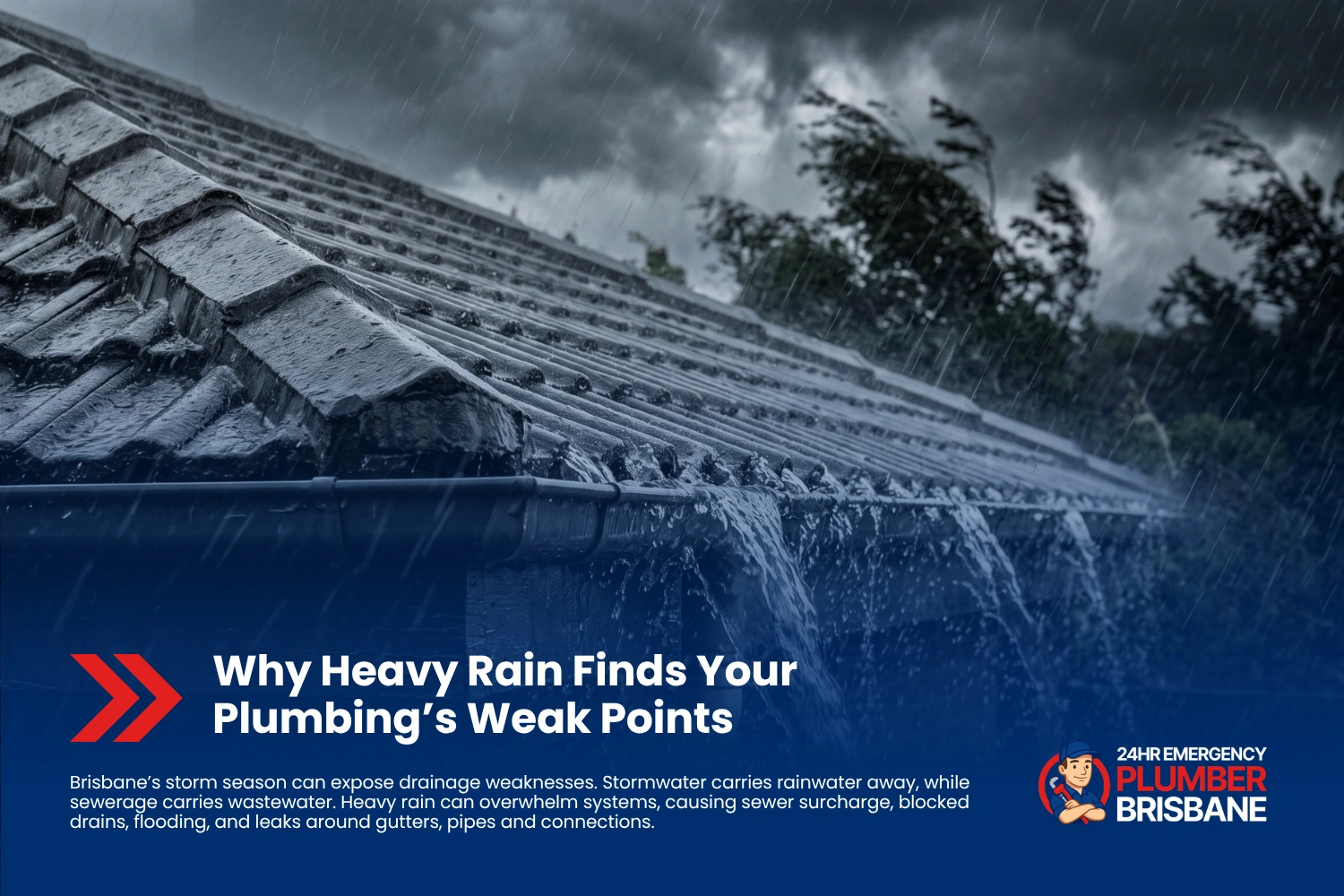
Roof Leaks in Heavy Rain
Roof leaks in heavy rain may show as a fresh ceiling stain, dripping light fitting, damp cornice or water tracking down an internal wall. The place where water appears is not always where it entered. Water can travel along battens, rafters, insulation or pipes before finding an opening in the ceiling.
Common failure points include penetrations, valleys, flashings, deteriorated seals and roof junctions. Wind-driven rain can expose gaps that stay dry in vertical rainfall. A blocked valley or restricted downpipe can also hold water high enough to pass beneath roofing components.
Why Metal Roof Leaks Appear in Heavy Rain
Metal roof leaks in heavy rain commonly involve perished fastener seals, poorly sealed laps, damaged flashings or corrosion around penetrations. Thermal movement can loosen fixings and open small water paths that become visible during a downpour.
Do not climb onto the roof. Contain the drip if it is clear of electricity and record where it appears. Once conditions are safe, water leak detection and repair can distinguish roof entry from a leaking pipe in the ceiling space.
Depending on the work, roof sheets, flashings, gutters and downpipes fall within roof plumbing or related building scopes in Queensland. Roof drainage may need a licensed roof plumber, while structural roofing or cladding may require an appropriately licensed contractor.
Gutters Overflowing in Heavy Rain
Gutters overflowing in heavy rain do not always mean the rainfall was too intense. The pattern can reveal the likely fault.
- Water spilling along most of the gutter: Debris, inadequate capacity or slow discharge may be responsible.
- Overflow concentrated near one end: A downpipe outlet may be blocked or restricted.
- Water sitting after rain: The gutter may have an incorrect fall, sag or low point.
- Water entering near an internal gutter: A box gutter, sump or rainhead may be overwhelmed or obstructed.
- Water behind the gutter: Its position, the fascia, flashing or roof edge may let water bypass the channel.
Box gutters sit within the roof area, so a blockage can send water into the building. Stains near an internal wall or ceiling junction can therefore indicate roof drainage trouble even when no outdoor overflow was obvious.
Wait for clear weather before checking from ground level. Do not use a ladder against wet gutters. If the source is hidden, arrange professional leak detection to identify the water path rather than sealing the first visible gap.
Leaking Windows During Heavy Rain
Leaking windows during heavy rain often show as water at the top corners of the frame, damp plaster above the opening, bubbling paint or moisture on the sill. Condensation usually forms across the glass or frame. Rain entry is more likely to appear during a particular wind direction or after sustained rainfall.
Causes include failed sealant, gaps at the window head, defective head flashing, wall cracks or water descending from a roof fault. Water may move inside the wall cavity before reaching the window.
If the source is a gutter, downpipe, roof penetration or concealed pipe, a plumber or roof plumber may be the right first call. Faults in the window installation, cladding, waterproofing or structural flashing may need a builder, window specialist or roofer. Leak tracing helps route the repair honestly.
Stormwater Drains Backing Up
Pooling around outdoor pits, slow downpipes or an overflowing surface drain can indicate a restricted stormwater route. Leaves and silt may be involved, but recurring trouble can point to roots, a crushed pipe, a displaced joint or inadequate capacity.
Keep clear of fast-moving or contaminated water. Do not open grates where suction, hidden depth or unstable ground may be hazardous. If water rises towards the home, move to safety and follow official warnings.
Once danger has passed, Emergency Plumbers Brisbane’s blocked drain service can clear the restriction and determine why the area keeps flooding. The aim is to restore flow and identify the cause, not push visible debris out of sight.
Sewer Surcharge: When Drains Bubble and Toilets Back Up
A gurgling toilet, bubbling floor waste, sewage smell or wastewater rising through a low drain can indicate a sewer surcharge or a private-line blockage. Their timing and spread help distinguish them.
If several fixtures are affected, stop using toilets, showers, sinks and appliances. Extra water increases the chance of an internal overflow. Keep people and pets away and call promptly if sewage enters the house.
Most properties have an overflow relief gully, or ORG. This grated outdoor outlet releases sewage away from the home if the sewer blocks or overloads. Urban Utilities explains that it also acts as a release point when excess rainwater enters the sewerage network.
Do not cover, seal or build over the ORG. Keep it clear. An overflow still needs investigation, but the gully may be preventing wastewater from emerging indoors.
Sewage Backing Up or a Drain Overflowing?
24hr Emergency Plumber Brisbane responds within 60 minutes, 24/7, with upfront fixed pricing and no hidden fees.
Call 0485 800 209Storm Damage You Cannot See: CCTV Drain Inspection
Some damage appears only after rain stops. Saturated ground can shift around buried pipes where support or joints were already weak. Roots or sediment can then enter a damaged section and cause recurring blockage.
Warning signs include slow drainage in dry weather, repeat overflow at one pit, a new yard depression, sewage odours or a blockage that quickly returns. Ground movement can also stress supply pipes, as explained in the guide to what causes pipes to burst.
A CCTV drain inspection sends a waterproof camera through an accessible line. It can locate roots, cracks, displaced joints, sediment, deformation or collapse. The plumber can then recommend targeted clearing, repair or relining instead of guessing. Inspection is most useful once water levels allow a clear view.
Preparing Your Plumbing Before Storm Season in Queensland
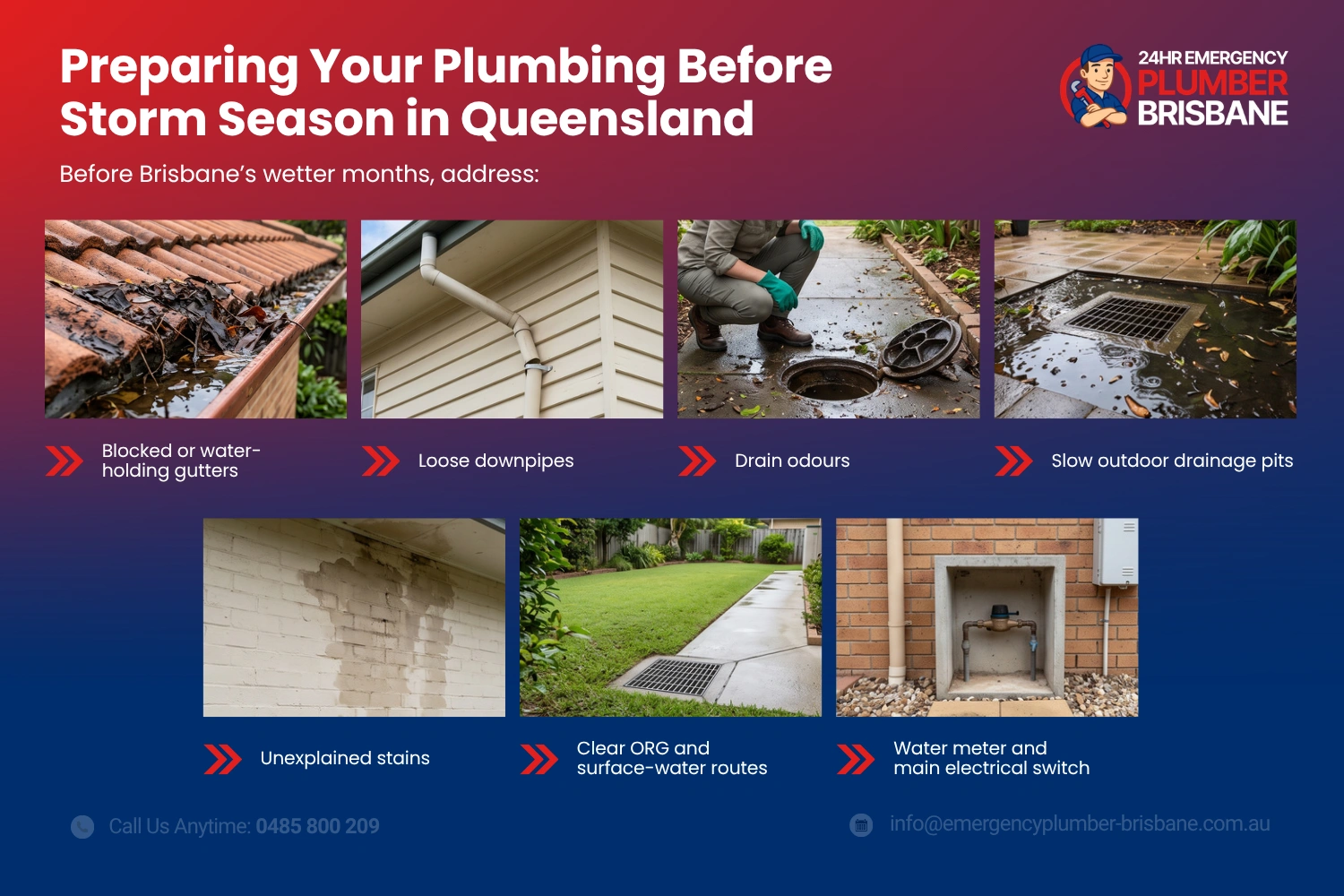
Preparing a home for storm season in Queensland means resolving symptoms before rainfall adds pressure. Think back to the previous wet season. Did one gutter spill first, a downstairs toilet gurgle or does a ceiling mark disappear when dry? Those details direct an inspection.
Before Brisbane’s wetter months, address gutters that hold water, loose downpipes, drain odours, slow outdoor pits and unexplained stains. Keep the ORG and surface-water routes clear. Know where the water metre and main electrical switch are, but operate them only with dry, safe access.
Homes with mature trees, older pipes or repeat blockages may benefit from inspection before the first downpour. Properties at flood risk should review Council information and current emergency plans.
After a Cyclone or Major Storm
Plumbing emergencies after a cyclone or major storm can occur alongside damaged power, unstable structures and contaminated floodwater. Personal safety comes before finding the source of a leak.
Wait for official advice before returning. Avoid fallen powerlines, damaged buildings and standing water. Brisbane City Council warns of contaminated water, mould and structural hazards in flood-affected homes. Call Triple Zero for immediate danger. The SES can assist with storm and flood emergencies.
When safe, photograph damage before clean-up and retain invoices and reports. Coverage varies, so check the policy and contact the insurer before authorising non-urgent work where practical. A plumber can document faults, but only the insurer can confirm coverage.
Frequently Asked Questions
Why Does My Ceiling Leak Only When the Rain Is Heavy?
Heavy rain can overwhelm a marginal gutter or push water through an opening that stays dry in light rain. Water travels inside the roof space, so the drip may not sit below the entry point.
Should I Use Chemical Drain Cleaner After Rain?
No. Chemicals will not repair a cracked, root-damaged or collapsed line and may create a handling hazard. Stop using affected fixtures and arrange diagnosis if drainage remains abnormal.
Can I Cover an Overflow Relief Gully to Stop the Smell?
No. The ORG must release wastewater outside if the sewer backs up. A persistent smell, low grate or repeat overflow should be assessed, not covered.
Who Should I Call for Water Entering Around a Window?
A plumber or roof plumber can assess gutters, downpipes, roof drainage and concealed pipes. A fault in the window, wall system or structural flashing may need a builder, window specialist or roofer.
Will Home Insurance Cover Plumbing Damage After Heavy Rain?
It depends on the policy, cause and exclusions. Document the timing and damage, take safe photographs and contact the insurer. Do not assume every rain-related leak is covered.
How Soon Should Drains Be Inspected After a Major Downpour?
Call immediately if sewage enters the property, water rises towards the home or several fixtures back up. For slow or recurring drainage, arrange inspection once water levels allow a clear view.
Back to Top: Plumbing Problems After Heavy Rain in Brisbane | Storm Season Survival Guide