Pipes burst when pressure, movement or corrosion creates more stress than the pipe or its fittings can withstand. In Brisbane, common causes include ageing copper pipework, reactive soil movement, high water pressure, tree roots and failed joints.
A burst may release a sudden rush of water, but many pipe failures start as a small split or pinhole leak. Knowing the warning signs can help you act before water reaches walls, flooring, cabinets or electrical fittings.
Key Takeaways
- Brisbane pipes commonly fail because of corrosion, soil movement, high pressure, tree roots, water hammer or weak joints.
- Damp patches, rising water bills, hissing sounds, lower pressure and rusty water can indicate damage before a full rupture.
- Common failure points include pipes beneath slabs, inside walls, in garden supply lines and around hot water systems.
- Pressure testing, pressure-limiting valves and planned replacement of deteriorated pipe runs can reduce the risk of a burst.
- If a pipe has already burst, turn off the water, avoid electrical hazards and call a licensed plumber.
Why Pipes Burst in Brisbane Homes
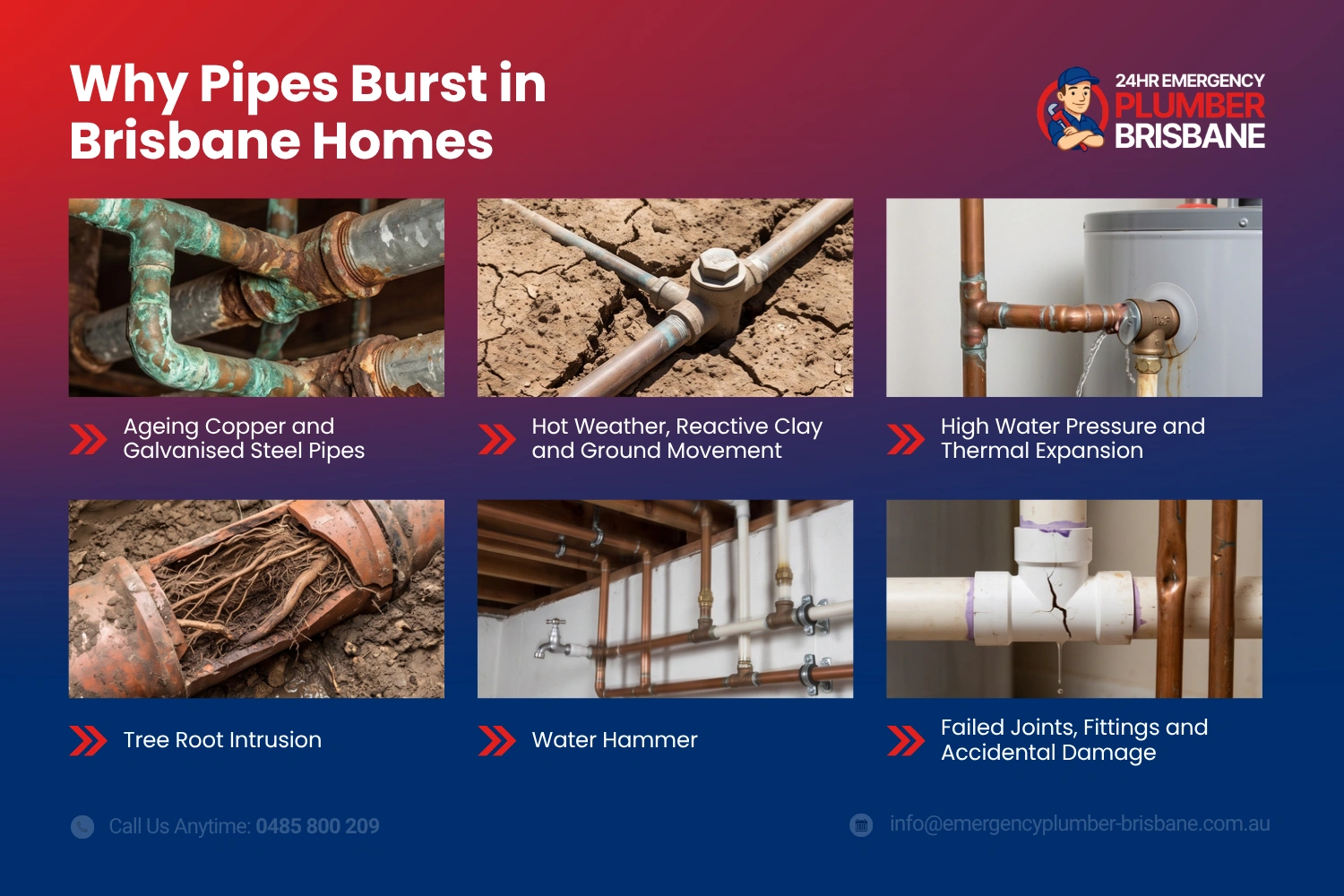
Why do pipes burst in a warm climate? Unlike advice written for colder countries, the answer in Brisbane is rarely centred on frozen water. Local pipework is more likely to be affected by ageing materials, changing soil moisture, heat, pressure and root growth.
Ageing Copper and Galvanised Steel Pipes
Copper is durable, but localised corrosion can eventually thin its wall until a pinhole develops. Early signs include green or blue staining, a fine spray, a damp cupboard or a moving water metre. Poor installation, contact with incompatible metals and years of physical stress can contribute, although the cause needs inspection.
Some older properties contain galvanised steel pipework. As its protective coating deteriorates, internal rust can restrict flow, discolour water and weaken the pipe or its threaded connections.
Hot Weather, Reactive Clay and Ground Movement
Hot weather does not usually make a sound pipe burst by itself. The greater risk is changing ground moisture. Clay-rich soil can contract during dry periods and swell after heavy rain or storm-season saturation. The Queensland Building and Construction Commission confirms that rapid wetting and drying can cause substantial ground movement in parts of Queensland.
That movement can bend or press buried water lines, especially beneath slabs, driveways and established gardens. This explains the local hot weather pipe burst Brisbane concern: heat changes the surrounding conditions, while physical strain causes the failure.
High Water Pressure and Thermal Expansion
Excessive static pressure strains pipe walls, valves, flexible connectors and joints. Heating water can add pressure through thermal expansion in a closed system. Banging pipes, forceful tap flow and repeated fixture failures are reasons to request a pressure test.
Urban Utilities notes that many properties built after 2005 have a pressure-reduction valve to protect internal plumbing and appliances. A licensed plumber can check whether the property has suitable pressure control and whether its valve works correctly.
Tree Root Intrusion
As tree roots thicken, they can shift or compress buried water services. Pipes near mature trees may crack or separate at a joint. Warning signs include a persistently wet or unusually green patch of lawn, lower indoor pressure and unexplained metre movement.
Water Hammer
Water hammer is the thud heard when moving water stops suddenly, often after an appliance valve closes. The pressure wave can move unsecured pipes and repeatedly stress clips, elbows, joints and connectors. An occasional noise does not prove a burst is imminent, but a recurring hammer deserves investigation.
Failed Joints, Fittings and Accidental Damage
Poor joints, worn seals, corroded fittings and ageing flexible hoses can become weak points. Drilling, excavation, gardening or heavy loads over shallow lines can also cause damage that only opens fully when pressure or movement increases.
Where Do Pipes Burst in a House?
Pipes can fail anywhere, but the location changes what a homeowner is likely to notice.
| Common location | Typical warning signs |
|---|---|
| Under or within a concrete slab | A warm floor area, damp flooring, unexplained meter movement, reduced pressure or the sound of running water when taps are off |
| Inside a wall or ceiling cavity | Bubbling paint, plaster discolouration, swelling skirting boards, musty odours, dripping sounds or water appearing below the damaged area |
| Garden or incoming water main | Soggy soil, an unusually green strip of lawn, pooling near the meter, low pressure throughout the home or a meter that keeps turning |
| Hot water line | Warm patches, water near the hot water unit, fluctuating pressure or moisture near bathrooms, kitchens and laundries |
| Under sinks, toilets or appliances | Corrosion, bulging flexible hoses, dripping connections, damp cabinets or water pooling around a fixture |
Water can travel along framing, pipes or concrete before it becomes visible. The stain on a ceiling or wall may therefore be some distance from the actual failure. Professional water leak detection can narrow down the source before unnecessary surfaces are opened.
The Warning Signs of Pipe Damage
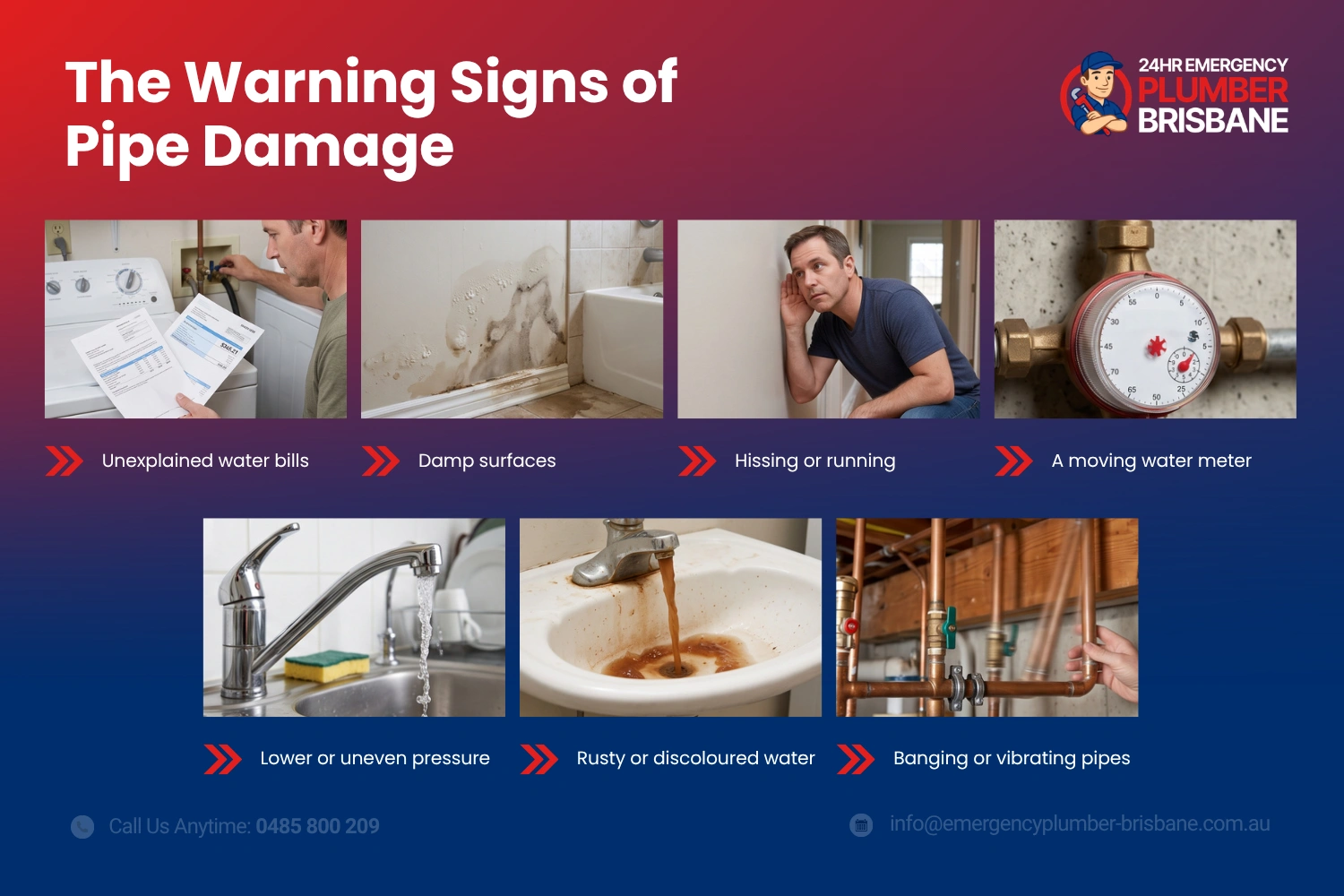
A major burst can appear sudden, but these smaller changes warrant attention:
- Unexplained water bills: A consistent or sharp increase without a change in household use can indicate hidden water loss.
- Damp surfaces: Stains, bubbling paint, warped flooring or a musty smell can indicate hidden moisture.
- Hissing or running-water sounds: Listen when all taps, toilets and water-using appliances are off.
- A moving water metre: With every outlet and automatic appliance off, continued use can indicate a leak.
- Lower or uneven pressure: A damaged supply line may divert water, although utility work and valve faults are other possibilities.
- Rusty or discoloured water: This can indicate older metal pipe corrosion, network work or a hot water fault.
- Banging or vibrating pipes: Recurring water hammer or movement suggests the system should be checked.
One sign alone does not confirm a burst. Several signs together, or a symptom that is worsening, justify prompt inspection.
How to Prevent Burst Pipes in Brisbane
No maintenance plan removes every risk, but these measures can prevent burst pipes in Brisbane:
- Test water pressure: A plumber can measure static and working pressure and, if necessary, install or service a compliant pressure-limiting valve.
- Investigate small leaks: A damp patch, corroded fitting or moving metre may allow a targeted repair before extensive water damage occurs.
- Inspect older pipework: Green staining, rust, pitting, bulging flexible hoses and repeated leaks deserve attention during maintenance or renovations.
- Consider planned replacement: One defect may suit a local repair. Repeated pinholes or joint failures along the same ageing run may make replacement or rerouting better value.
- Monitor bills and the metre: Learn where the main stop tap is and periodically check the metre while all water use is off.
- Protect buried services: Locate pipes before digging or planting and avoid heavy loads over shallow lines. Watch for new soggy patches after drought or intense rain.
This approach focuses on condition, pressure and local ground movement. A rare cold snap may affect exposed plumbing, but frozen pipes are not the main Brisbane risk.
Burst Pipe Right Now?
24hr Emergency Plumber Brisbane responds within 60 minutes, 24/7, with upfront fixed pricing and no hidden fees.
Call 0485 800 209What to Do When a Pipe Bursts
Once the immediate water supply is off, keep safety ahead of clean-up.
- Keep people away from hazards. Do not touch wet electrical equipment or enter pooled water near a power source.
- Mention hot water involvement. Do not operate a system that may no longer have a safe water supply.
- Limit spreading water where safe. Move belongings and use containers without entering a hazardous area.
- Record visible damage. Photos may help with an insurance enquiry, but never delay urgent safety work.
- Call a licensed plumber. Makeshift repairs can fail under pressure or conceal further damage.
When you call 24 hr Emergency Plumber Brisbane, the team completes a quick phone assessment and despatches a licensed, insured plumber with a fully stocked vehicle. Burst-pipe calls receive priority, with a 60-minute response guarantee across the service area.
On arrival, the plumber locates the failure, checks contributing factors and explains the repair options. The aim is a first-visit fix where access and materials allow. Upfront fixed pricing is provided before work begins, with no hidden fees and a lifetime workmanship warranty.
Get Help With a Burst Pipe, Day or Night
A burst pipe needs a safe shutoff and a proper diagnosis, not guesswork. Call 0485 800 209 for 24/7 burst pipe repair in Brisbane or submit the Book a Plumber form for a non-immediate concern.
The family-owned team has served Brisbane since 2017, with licensed and insured plumbers, fully stocked vehicles, upfront fixed pricing and a fix-on-first-visit aim. Emergency calls receive a 60-minute response guarantee across more than 50 Northside and Southside suburbs.
Frequently Asked Questions
Will Home Insurance Cover a Burst Pipe?
Some policies cover sudden and accidental water damage, but exclusions and limits vary. The damaged pipe and resulting property damage may be treated differently. Check the Product Disclosure Statement and contact the insurer. A plumber can provide repair documentation where required.
How Much Does Burst Pipe Repair Cost in Brisbane?
Cost depends on location, access, pipe material, damage and whether leak detection is needed. A visible garden line differs from a hidden slab failure. Upfront fixed pricing is provided before approved work starts.
Is It Better to Repair or Replace a Damaged Pipe?
An isolated crack may suit a local repair. Replacement or rerouting may be more practical when a pipe run is badly corroded, inaccessible or failing repeatedly. The plumber should compare the available options.
Can a Pipe Leak Beneath a Slab Without Visible Water?
Yes. Water may disperse into soil or travel through building materials. Metre movement, a warm floor patch, damp flooring or running-water sounds can justify leak detection.
Should I Turn Off My Hot Water System After a Burst?
Tell the plumber if the leak appears to involve a hot water line or unit. Isolation depends on the system. Do not touch wet controls or attempt repairs.
How Fast Can an Emergency Plumber Attend?
24hr Emergency Plumber Brisbane is available 24/7, 365 days a year, with a 60-minute response guarantee for emergency calls.
Back to Top: What Causes Pipes to Burst? Warning Signs, Causes, and What to Do Next