If your overflow relief gully is blocked or wastewater is spilling into your yard, stop using water inside and keep people and pets away from the area. The gully may be doing exactly what it was designed to do by releasing sewage outdoors before it can back up through a toilet, shower or floor drain. However, the overflow still indicates a blockage, sewer surcharge or drainage problem that needs prompt attention.
Do not seal the grate, cover the gully or force wastewater back down it. Call Emergency Plumbers Brisbane on 0485 800 209 for a fast response, 24/7.
Key Takeaways
- An overflow relief gully, or ORG, provides a controlled outdoor release point if sewage cannot flow normally through the sewer.
- Wastewater coming from the gully can help protect your home from an internal sewage backup, but it still means something is wrong.
- The grate should sit at least 75 mm above the surrounding finished ground level and remain unobstructed.
- Heavy Brisbane rain can cause sewer surcharge and expose drainage problems.
- Stop using toilets, taps, showers, washing machines and dishwashers while the gully is overflowing.
- Keep people and animals away from sewage and call a licensed plumber if the overflow does not stop or returns.
What Is an Overflow Relief Gully?
An overflow relief gully is a grated fitting connected to a property’s sanitary drainage. It is usually outside the house near a bathroom, laundry or kitchen.
The fitting generally looks like a small round or square grate positioned close to ground level. Its most important purpose is to provide a relief point for the sanitary drainage system.
If wastewater cannot continue towards the sewer, its level can rise through the pipes. The gully lets it escape before it reaches lower fixtures inside.
It is not the same as a stormwater drain. An ORG carries wastewater, while stormwater drains manage rain from roofs and outdoor surfaces. Directing stormwater into the sanitary sewer can overload the system during heavy rain.
Why Is an Overflow Relief Gully Designed to Overflow Into the Yard?
The gully is a designed failure point. If the sewer cannot accept more wastewater, it releases outside rather than through a toilet, shower or floor waste inside your home.
This does not mean an overflowing gully should be ignored. It means the safety feature may be limiting the damage while alerting you to an underlying fault.
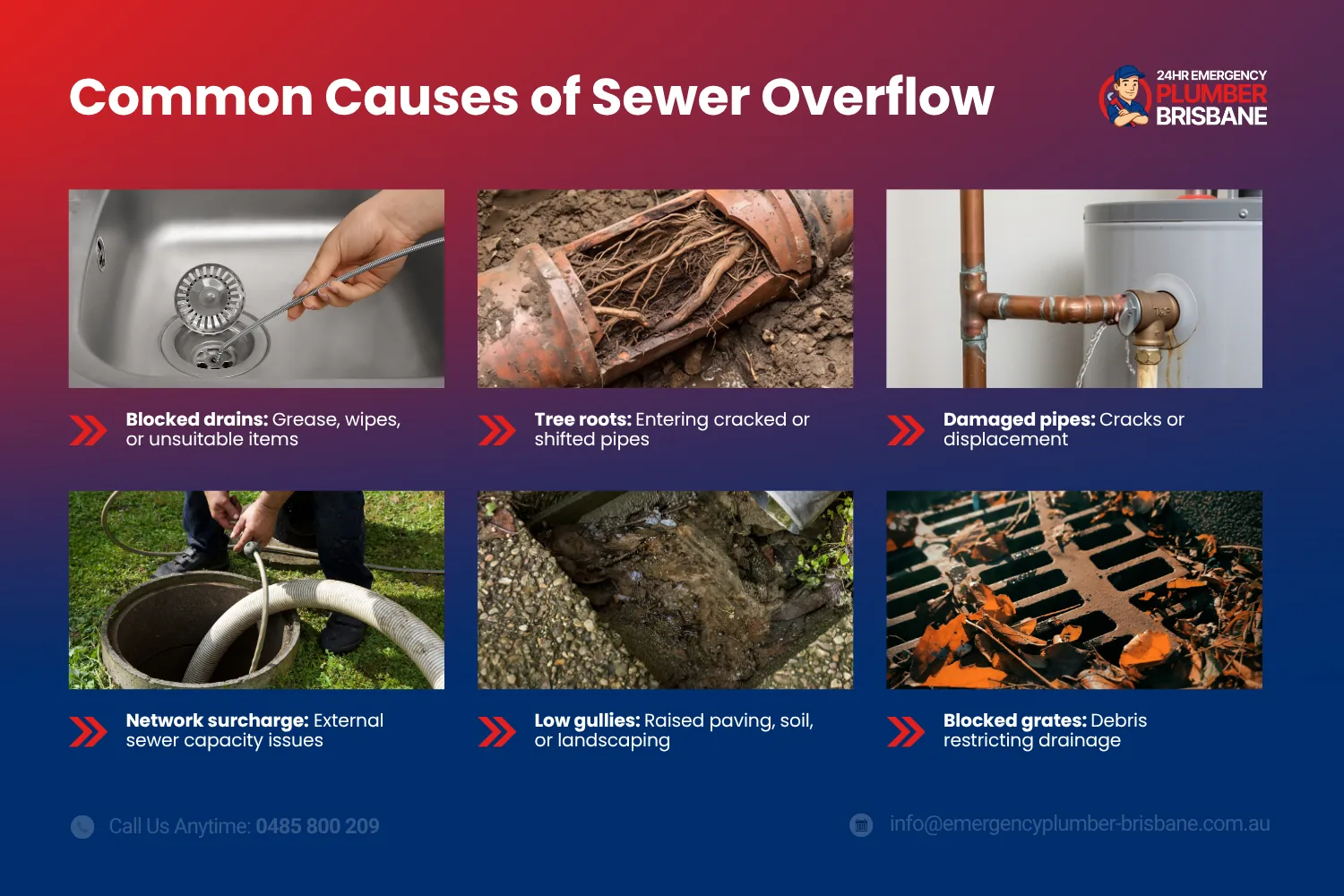
An overflow can be caused by:
- A blockage in the property’s sewer drain
- Tree roots entering cracked or displaced pipes
- Grease, wipes, sanitary products or other unsuitable items in the drain
- A damaged sewer pipe or surcharge in the external network
- A gully installed too low or surrounded by raised paving, soil or landscaping
- Debris obstructing the grate
If several fixtures are slow, toilets gurgle or water rises in the gully when you use a tap, the restriction may be within your private drainage. If it appears during intense rain, sewer surcharge or stormwater infiltration may be contributing. A plumber can determine where the problem is located.
Urban Utilities Requirements: 75 mm Clearance and a Clear Grate
In the Urban Utilities service area, the top of the gully must be at least 75 mm above the surrounding finished ground level and kept clear.
This helps keep surface water out while allowing wastewater to escape when the drain surcharges.
Changes around the home can unintentionally make an ORG non-compliant or ineffective. Common examples include:
- New paving installed too close to the grate
- Garden soil or mulch built up around the fitting
- A structure, pot or stored item covering the gully
- A sealed or jammed grate
- Yard runoff flowing towards a gully that now sits too low
Do not cap or seal an overflow relief gully. Doing so can remove the release point and increase the chance of sewage backing up inside. If the gully smells, overflows repeatedly or appears too low, have it assessed.
Homeowners should also check the area after landscaping, concreting or renovation work. A grate that was once 75 mm above the ground may no longer have adequate clearance after the surface level changes.
Why Overflow Relief Gullies Matter More From October Onward
From October onward, Brisbane’s storms and intense rainfall can place extra pressure on sewers, particularly where pipes or private connections are damaged.
A sanitary sewer should not carry roof water or yard runoff. However, rain can enter through cracked pipes, low gullies or faulty connections. If the sewer surcharges, wastewater seeks the lowest available escape point.
A correctly positioned, clear gully gives wastewater a safer path outdoors. One that is covered, sealed or too low may admit stormwater or fail to protect the house.
Before storm season, clear leaves and movable items from around the grate. Check that water cannot pond over it and that landscaping has not raised the surrounding level. Recurring wet-weather overflows warrant an inspection.
Our stormwater drain services can also help when poor runoff, damaged drainage or an incorrect connection is contributing to water problems around the property.
What to Do If Your Overflow Relief Gully Is Blocked or Overflowing
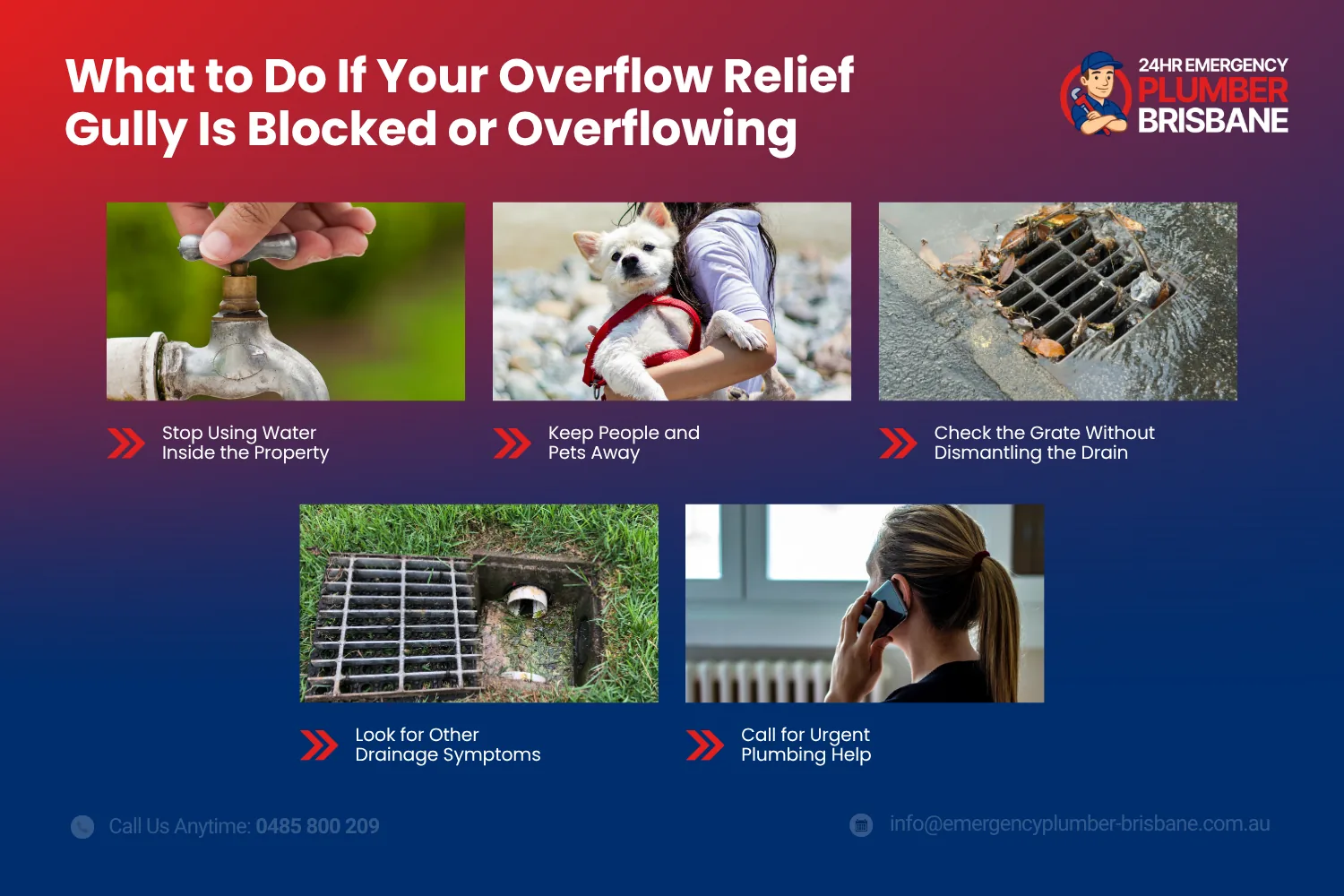
1. Stop Using Water Inside the Property
Do not flush toilets, shower, run taps or use water-consuming appliances. More water can worsen the overflow.
In a multi-unit property, notify the body corporate or property manager because other occupants may also be using shared drainage.
2. Keep People and Pets Away
Treat sewage as contaminated. Keep children and animals away and avoid direct contact.
Do not hose sewage into the street, garden or stormwater system. This can spread contamination and move wastewater into local waterways.
3. Check the Grate Without Dismantling the Drain
From a safe position, look for leaves, mulch or an object on top of the grate. Only clear dry surface debris if you can do so without touching sewage, and wear suitable protective gloves.
Do not put your hands or tools into the drain, remove the grate while wastewater is rising, use corrosive chemicals or seal the opening. The blockage may be further along the sewer line.
4. Look for Other Drainage Symptoms
Tell the plumber if you have noticed:
- Slow sinks, showers or floor drains
- A toilet that rises, drains slowly or gurgles
- Multiple fixtures affected at once
- Sewage smells inside or outside
- An overflow that begins during or soon after heavy rain
These details can help narrow down whether you are dealing with a local fixture issue, a blocked drain, damaged pipework or a broader sewer surcharge.
5. Call for Urgent Plumbing Help
Call a licensed plumber if sewage is flowing, the level rises, several fixtures are affected or the problem returns. Prompt action can help prevent an internal backup.
A plumber may use drain-clearing equipment and CCTV inspection to locate the restriction. If the fault is in the external network rather than the property’s drainage, you can then be directed to the appropriate utility response.
Overflow Relief Gully Overflowing Now?
24hr Emergency Plumber Brisbane responds within 60 minutes, 24/7, with upfront fixed pricing and no hidden fees.
Call 0485 800 209Do Not Ignore an Overflow That Stops by Itself
An overflow that subsides after rain passes or water use stops can still indicate a partial blockage, damaged drain or surcharge. Arrange an inspection if it happens repeatedly or you find sewage residue around the grate.
If your overflow relief gully is blocked or overflowing now, Emergency Plumbers Brisbane can help. We are a family-owned and operated team serving Brisbane since 2017, with licensed and insured plumbers across more than 50 Northside and Southside suburbs.
Call 0485 800 209 for our 60-minute response guarantee, upfront fixed pricing and no hidden fees. Our workmanship is backed by a lifetime warranty.
FAQs on Overflow Relief Gully Blocked or Overflowing?
Is an Overflowing Relief Gully Always Caused by a Blockage?
No. The sewer can also surcharge during heavy rain or because of a problem in the external network. Stormwater infiltration, damaged pipework and an incorrectly positioned gully can contribute.
Can I Cover an Overflow Relief Gully to Stop It Overflowing?
No. It must remain open so wastewater can escape outside if the sewer backs up. Covering it may force sewage through a fixture inside the home.
Why Does My Overflow Relief Gully Overflow When It Rains?
An overflow during rain can indicate sewer surcharge or stormwater entering through a low gully, cracked pipe or faulty connection. A partial blockage may also reduce capacity during wet weather.
How High Should an Overflow Relief Gully Be Above the Ground?
The top of the gully should sit at least 75 mm above the surrounding finished ground level in the Urban Utilities service area. It must also remain unobstructed so surface water cannot easily enter and wastewater can escape when required.
Is Sewage Overflowing in a Brisbane Backyard Dangerous?
Yes. Keep people and pets away, stop using water and do not spread the wastewater with a hose. The area may require appropriate cleaning and disinfection after the plumbing problem is controlled.
Who Should I Call for an Overflowing Relief Gully in Brisbane?
Call a licensed emergency plumber if wastewater is actively escaping, internal fixtures are backing up or the overflow keeps returning.
Emergency Plumbers Brisbane is available 24/7 on 0485 800 209. We can inspect the private drainage and advise you if the issue appears to involve the external sewer network.
Back to Top: Overflow Relief Gully Blocked or Overflowing? | What It Means and What to Do