Most plumbing emergencies in Brisbane homes do not start as emergencies. They start small: the slow drip you walked past for a fortnight, the toilet that gurgles when the washing machine empties, the patch of damp you keep meaning to look at. A lot of the urgent callouts we run could have been a quiet weekday repair if the warning sign had been picked up a couple of weeks earlier.
This guide covers the five warning-sign categories every Brisbane homeowner should be able to recognise: water leaks, drains, pipe damage, gas, and hot water. None of these signs guarantees a disaster is coming, but each one tells you the system is asking for attention. If you are not sure how urgent it is, call 0485 800 209 and we will help you triage it over the phone before deciding whether you need a same-day visit or a booking next week.
Key Takeaways
- Water leaks. Discoloured patches, rising bills, musty smells — call the same day before mould sets in.
- Drains. Slow water, gurgling, sewage smells, multiple fixtures slow together — book within 24 to 48 hours.
- Pipe damage. Water hammer, rust-coloured water, dropping pressure, green corrosion on copper — call before the pressure spike that finishes it.
- Gas. Rotten-egg smell, hissing, yellow flames, pilot light failing — stop using the appliance and call immediately from outside.
- Hot water. Rusty hot water, pooling at the base, short shower runs — replace before the tank wall fails completely.
Water Leak Warning Signs
Most water leaks in Brisbane homes are slow before they are fast. The fast ones (a burst hose under the kitchen sink, a split pipe in the wall) announce themselves clearly. The slow ones do the real damage, quietly soaking gyprock, swelling skirting boards, and feeding mould inside the cavity for weeks before anyone notices.
The warning signs to look for:
- Discoloured patches on ceilings or walls — yellow-brown rings, blistering paint, or a patch that looks slightly darker than the surrounding paint when the room is humid.
- Water bill creeping up with no change in household habits. Compare the last quarter to the same quarter a year ago; a clear jump you cannot explain is worth investigating.
- Damp or musty smell that does not clear after airing the room. The smell is the spore — by the time you can identify it, mould is already established somewhere.
- Sound of water running inside walls or under floors when no taps are open. Stand still in the quietest part of the house at night and listen near suspicious areas.
- Mould reappearing in the same corner after you scrub it off. Surface mould comes back when the moisture source has not been fixed.
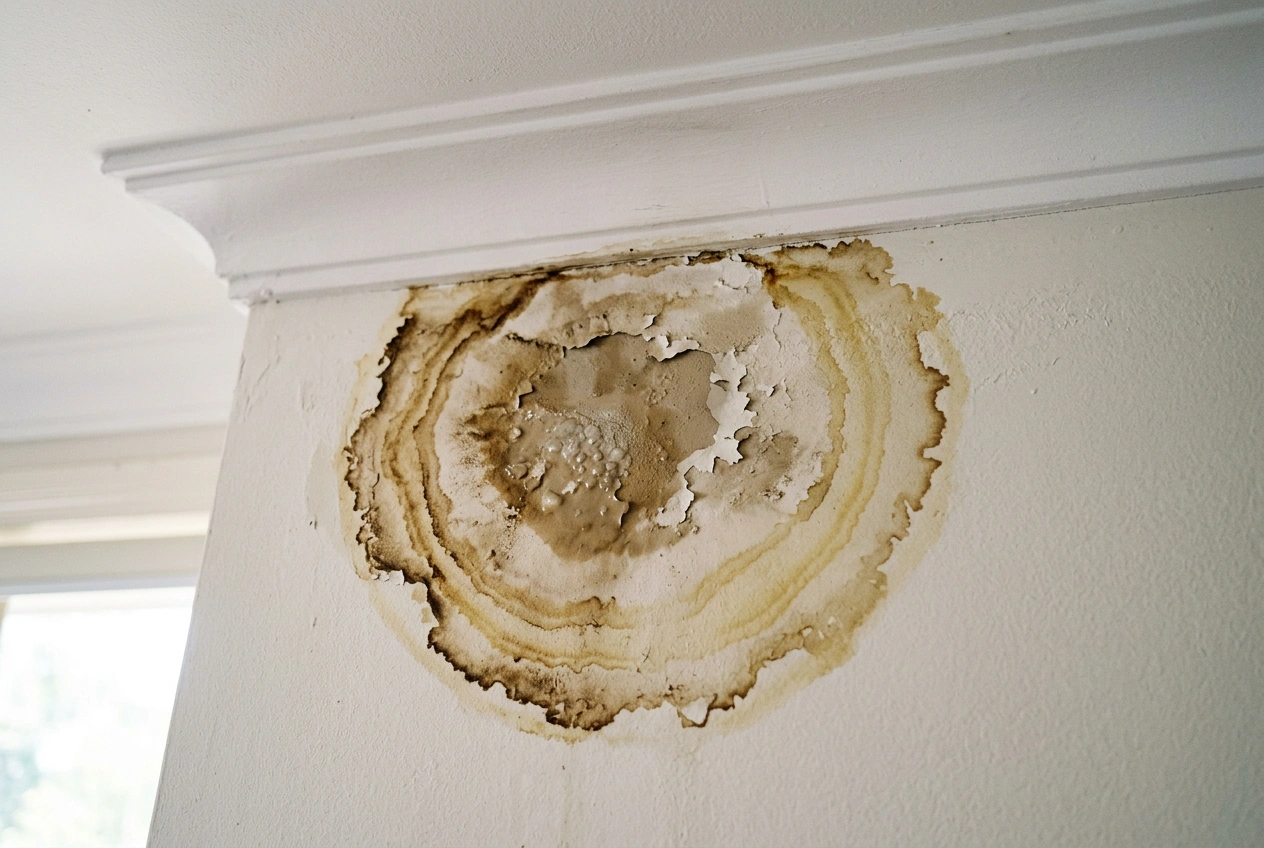
A slow leak today is often the early warning of a burst later. Our water leak detection service uses acoustic and thermal gear to find hidden leaks without pulling apart walls, which is far cheaper than guessing where the water is coming from.
Drain Warning Signs
Drains tell you they are blocking before they actually block. The first sign is almost never a complete stoppage; it is small changes that get dismissed as "just one of those things". They are usually not.
- Slow drainage at a sink, basin, or shower. Water that lingers around the plug for more than ten seconds is a partial blockage that is already growing.
- Gurgling from a toilet or floor drain when the washing machine empties, or when a shower drains. The gurgle is air being pulled past a partial blockage.
- Recurring blocks in the same fixture, even after a plunger or a chemical treatment seemed to fix it. That is the blockage reforming, usually from grease, hair, or root intrusion.
- Sewage or sulphur smell from drains, especially after hot weather or when fixtures have not been used for a day or two. Healthy drain traps hold a water seal — a smell usually means the seal has broken or there is buildup releasing gas.
- Multiple fixtures slowing simultaneously. If the kitchen sink, laundry tub, and bathroom basin all slow at once, the issue is not in any individual branch — it is in the main drain, and a flush at the highest fixture will back up at the lowest.
For single-fixture issues, see our blocked drain repair page; for a toilet specifically, the blocked toilet page covers the difference between a plunger job and a job that needs a drain camera. For recurring blockages, a one-off CCTV inspection often pays for itself by finding the root cause instead of clearing the symptom.
Pipe Damage Warning Signs
Pipes do not fail randomly. They fail when corrosion, soil movement, pressure, or temperature stress has been working on a weak point for weeks or months. Catching the signs early means a plumber can replace the affected section as a planned job rather than an emergency.
- Water hammer — a loud bang in the walls when you close a tap or when a washing machine valve shuts off. The bang is a pressure shockwave; over time it loosens joints and tires out old pipework.
- Discoloured water first thing in the morning, especially rust-coloured or slightly brown. Stale water sitting in corroding internal pipework picks up the colour overnight.
- Pressure drop across the whole house that gets worse over weeks. A real pipe issue gets steadily worse; a council-side issue is usually sudden and tied to known mains work.
- Visible green or white crusty corrosion on copper joins under sinks, behind hot water units, or at the meter. That is the join leaching minerals — the seal is already failing.
- Damp patches that move with the seasons. Slow under-slab leaks shift as soil expands and contracts, so the patch you saw in February may have migrated by August.
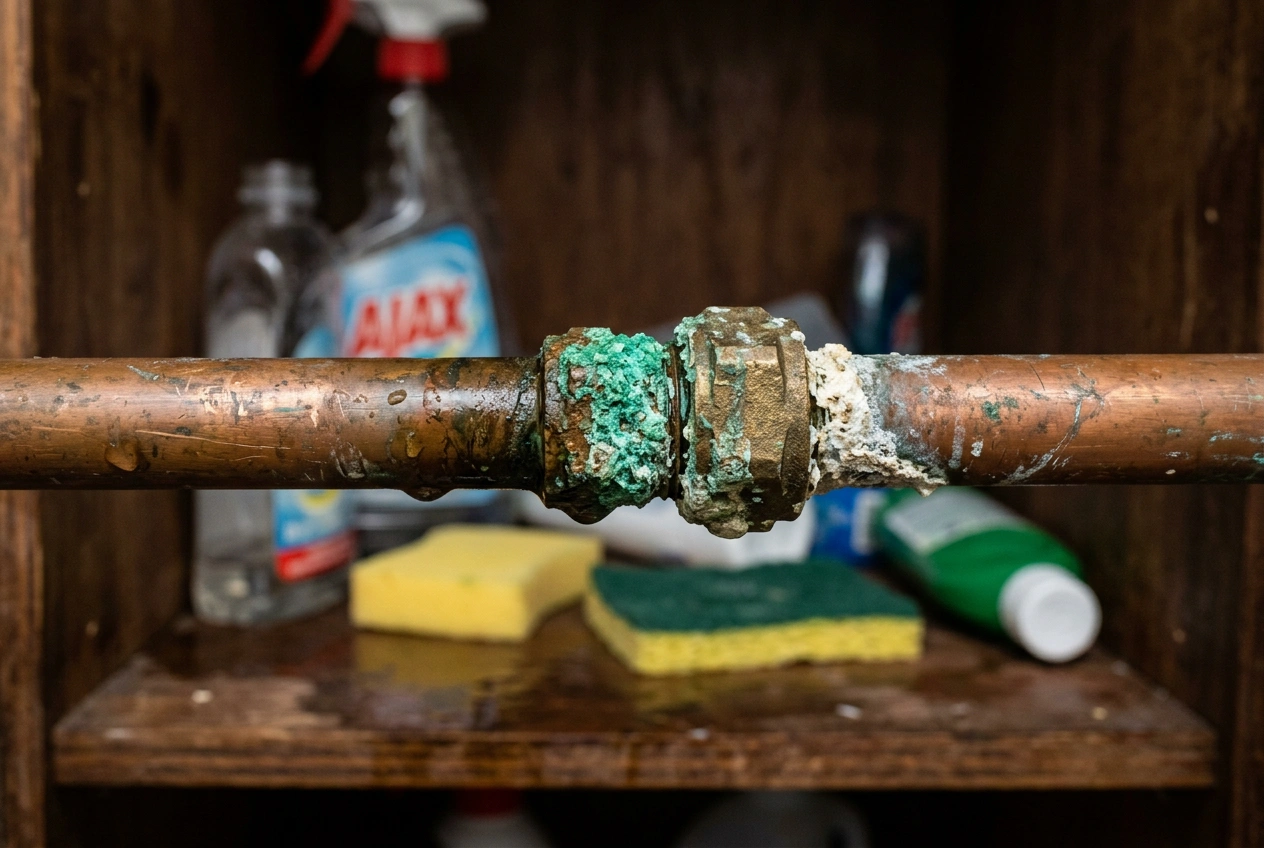
Once these signs show up, a planned repair is almost always cheaper and less disruptive than waiting for the pipe to let go. See our burst pipe repair page for what is involved when one finally fails.
Gas Warning Signs
Gas warning signs are different from water signs: the timeline is shorter and the stakes are far higher. Treat any gas warning as immediate.
- Rotten-egg smell anywhere near a gas appliance, the gas meter, or the hot water unit. Natural gas is odourless; the rotten-egg smell is an additive specifically to make leaks detectable.
- Hissing sound near a regulator, connection, or appliance — even a faint one. A small leak hisses; a bigger one is silent because the gas escapes too fast to vibrate the join.
- Pilot light that keeps going out, especially on an older hot water system or gas heater. The cause may be a draft or a thermocouple, but it can also be insufficient gas pressure from a partial supply blockage.
- Yellow, orange, or flickering flame on a gas cooktop. A correct gas flame is sharp blue with a small inner cone. Yellow flame means incomplete combustion — that is carbon monoxide territory.
- Carbon monoxide alarm trips, or unexplained headaches/nausea that get better when you leave the house. Both warrant a same-day gas inspection.
If you smell gas right now: do not switch any electrical fitting on or off (including light switches), open windows and doors, leave the property, and call 0485 800 209 from outside. Do not call from inside the house. For ongoing gas servicing and appliance work, see our gas plumbing page.
Hot Water Warning Signs
Hot water systems give plenty of warning before they fail; most homeowners just do not know what to look and listen for. A tank that seems to fail overnight has usually been signalling for weeks.
- Lukewarm water at the hottest setting on the tap. Element or thermostat failure in an electric unit; gas valve or thermocouple issue in a gas unit.
- Rust-coloured discharge on hot taps only, not cold. The cold pipework is fine — the rust is from the internal lining or anode rod of the tank itself.
- Pooling water at the base of the tank. Once water is pooling, the tank wall has perforated; the unit is past repair and into replacement.
- Banging or popping noise from inside the unit when it is heating. Sediment build-up trapped under the heating element causes the bangs and accelerates the next failure.
- Hot water only lasts a few minutes when it used to last twenty. Sediment has displaced part of the tank's usable volume, or the dip tube is failing.
Spotting these early lets you plan a replacement on your own timeline instead of scrambling the day the tank gives out. See our hot water system repair and replacement page for diagnostics and replacement options.
Frequently Asked Questions
How do I know if my plumbing problem is an emergency?
A plumbing problem is an emergency when one of three things is true: water is actively running and you cannot shut it off, a fixture has stopped working in a way that makes the home unusable (only toilet blocked, no hot water in winter, no kitchen tap), or you can smell gas. Everything else is urgent-not-emergency — call within 24 hours, but you do not need the after-hours rate. If you are unsure, call 0485 800 209 and the team will triage it with you over the phone.
Can I keep using a toilet that's slow to drain?
For a day or two, yes — but only if the rest of the house is draining normally. A single slow toilet is usually a partial blockage in that branch line that will clear or worsen. If a second fixture starts slowing (basin, shower, bath), stop using the toilet and call a plumber — that means the blockage has moved into the main drain and a flush will eventually back up into the lowest fixture in the house.
What does a hot water leak look like before the tank fails?
The early signs are subtle: a slight rust smell on hot water for a week or two, a faint dripping sound from the unit when nobody is using hot water, and a small amount of moisture or rust staining at the very base of the tank. Once you see actual pooling water, the tank wall has already perforated and the unit is past replacement, not repair.
Is a slow drip from a tap actually a problem?
Yes, for two reasons. First, a slow drip wastes 10 to 25 litres a day depending on the rate — that is a real number on your Brisbane water bill across a year. Second, the drip is telling you a washer or O-ring has perished, and the same valve is the one that will eventually fail open if ignored. A 20-minute washer replacement now beats a flooded vanity later.
How fast does mould start after a hidden leak?
Visible mould can appear in 24 to 48 hours on damp gyprock, MDF, or carpet underlay, especially in Brisbane summer humidity. By the time you see black spots, the spores have already spread through the cavity. That is why the warning signs — musty smell, peeling skirtings, paint blistering — matter more than waiting for visible mould. If you can smell damp but cannot see it, get a leak detection visit before it becomes a remediation job.
Back to Top: Plumbing Warning Signs You Shouldn't Ignore (Brisbane Homeowner's Guide)